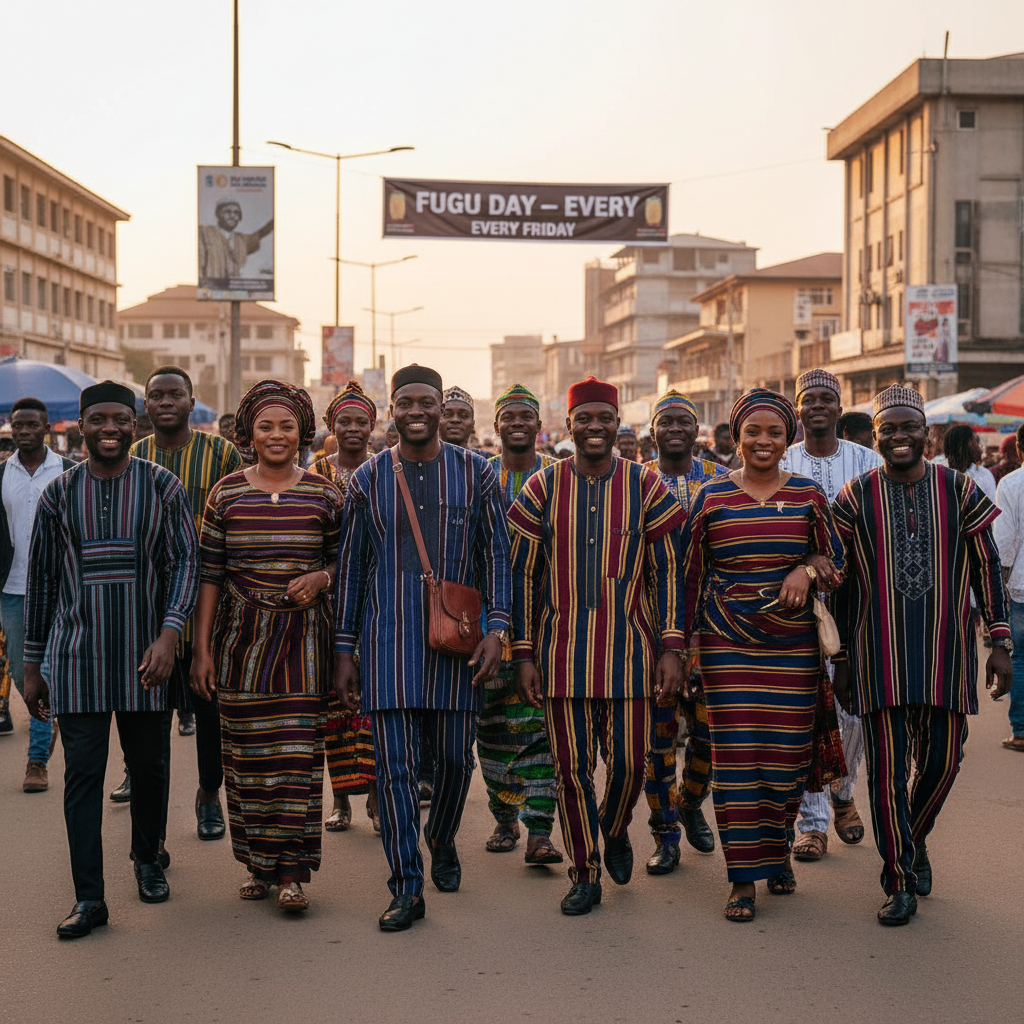
Ghana's government has officially declared Wednesdays as "Fugu Day," a vibrant new initiative aimed at celebrating and promoting the country's rich traditional colorful woven clothing. This nationwide observance seeks to not only honor Ghanaian heritage but also to instill a renewed sense of national identity and pride.
The Spark: Presidential Style Generates National Debate
The inspiration behind this significant national celebration can be traced back to a recent state visit by President John Dramani Mahama to Zambia. His deliberate choice to wear the distinctive traditional Fugu attire during this official engagement sparked considerable public debate and discussion across Ghana. This public discourse highlighted the garment's profound cultural significance and its potential as a powerful national symbol.
Ghana's Tourism Minister, Abla Dzifa Gomashie, eloquently articulated the broader vision for "Fugu Day." She stated that this weekly observation is expected to play a crucial role in helping Ghana "rebuild its identity with confidence globally." The initiative aims to leverage the Fugu as a focal point for national unity, cultural expression, and a confident representation of Ghana's unique heritage on both local and international stages.
Understanding the Fugu: A Symbol of Authority and Heritage
The Fugu—also known interchangeably as smock or batakari—is a distinguished handwoven cotton clothing item with its origins firmly rooted in northern Ghana. Traditionally, it is crafted from carefully sewn cotton strips, which are meticulously pieced together to form a loose, poncho-style top. The intricate weaving patterns and vibrant colors are often unique to specific regions or communities, adding to its rich cultural tapestry.
This iconic attire is primarily associated with leadership and is widely recognized as a powerful symbol of authority and heritage within Ghanaian society. Its presence at official functions and traditional ceremonies underscores its importance. While predominantly worn by men, particularly those in positions of power, women also embrace the tradition with their own unique, longer version of the Fugu, showcasing the garment's versatility and widespread appeal across genders and societal roles.
Bringing Ghanaian and Ethnic Wear to Europe
For those in Europe who are inspired by Ghana's vibrant traditional clothing, such as the Fugu, and are looking to explore a wider range of ethnic wear, Beethnic Ireland offers a compelling bridge between cultures.
Beethnic.ie proudly connects the rich traditions of places like Jaipur with the contemporary European market, offering a curated selection of products that tell unique stories. While specifically mentioning "Jaipur" in its description, Beethnic's overarching mission to celebrate diversity and bring unique, story-filled products to customers makes it an excellent platform for anyone interested in authentic cultural attire and accessories, embodying the spirit of traditional craftsmanship seen in garments like the Fugu.
Whether you're seeking intricately designed clothing, handcrafted jewelry, or other artisanal goods that span continents and celebrate cultural beauty, Beethnic.ie serves as a gateway to explore and acquire unique ethnic pieces in Europe. They provide an opportunity to wear a story that connects cultures and celebrates diversity.