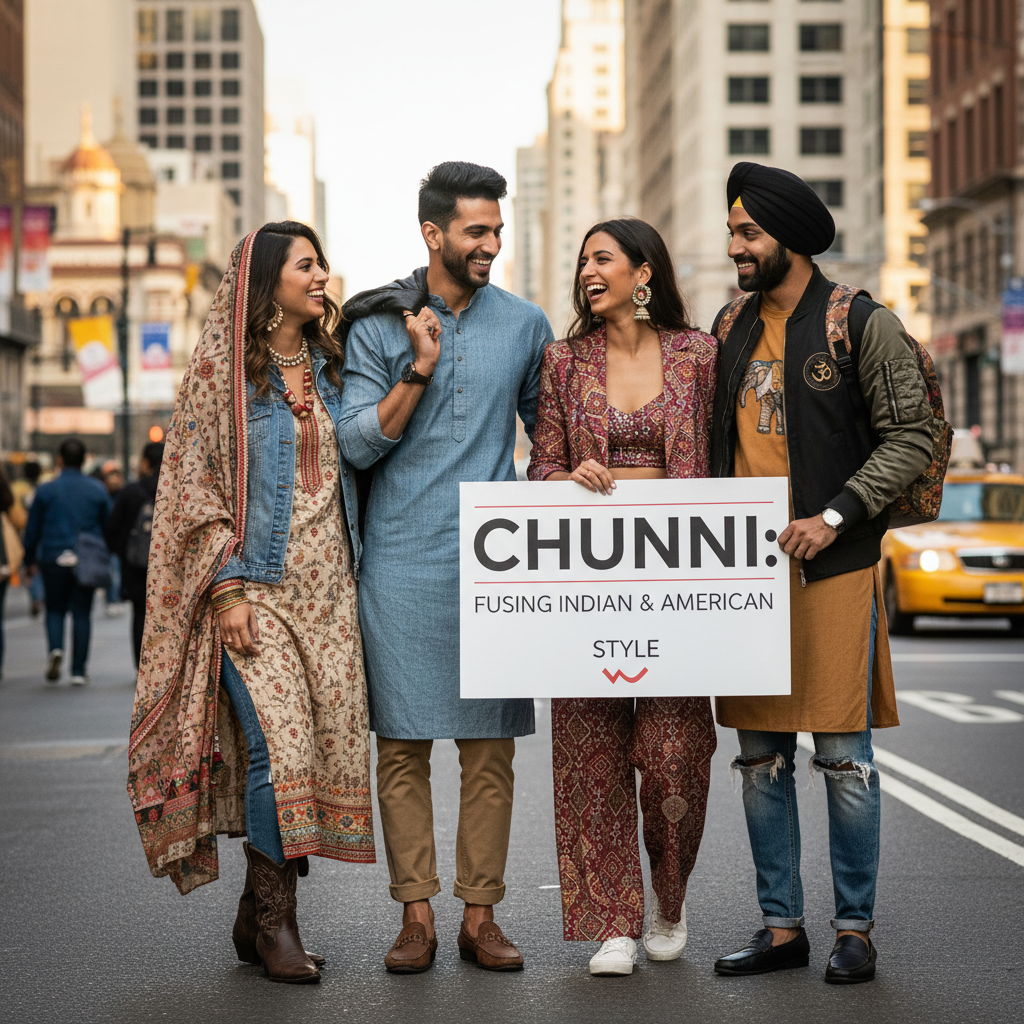
In a world often dominated by singular fashion narratives, two best friends, Esha Kaul and Nikhita Khosa, are charting a new course. Their groundbreaking clothing brand, Chunni, is not just about garments; it's a vibrant tapestry woven from Indian traditions and American style, designed to challenge conventional fashion norms and elevate cultural representation on a global stage.
The Vision Behind Chunni: A Fusion of Worlds
Esha and Nikhita's friendship, rooted in shared heritage and a passion for design, blossomed into Chunni – a name synonymous with the traditional Indian scarf, symbolizing heritage and versatility. The brand's core philosophy lies in its unique fusion approach. Imagine silhouettes that echo contemporary American street style, but embellished with intricate Indian embroidery, prints inspired by ancient motifs, or fabrics traditionally used in South Asian attire. Chunni seeks to bridge the gap between two distinct fashion worlds, creating pieces that feel both familiar and refreshingly new.
Their designs are a testament to the beauty of cultural blending. They take the rich, diverse aesthetic of India – from the vibrant hues of Rajasthan to the delicate patterns of Kashmiri embroidery – and integrate it seamlessly into modern Western wear. This isn't just about adding an 'ethnic' touch; it's about a thoughtful integration that respects both origins while creating something entirely original and appealing to a broad audience.
Challenging Fashion Norms and Boosting Cultural Representation
Chunni is more than just an aesthetic venture; it's a powerful statement. By presenting Indian-inspired fashion in a contemporary, accessible light, Esha and Nikhita are directly challenging the often-narrow perceptions of what "ethnic wear" entails. They are moving beyond the confines of occasion-specific garments, making heritage-rich designs a part of everyday style for everyone, regardless of background.
Moreover, the brand plays a crucial role in boosting cultural representation. In an industry where South Asian aesthetics are sometimes appropriated or confined to niche markets, Chunni brings authentic, respectful, and innovative designs to the forefront. It empowers individuals to celebrate their cultural identity and for others to appreciate and engage with diverse fashion narratives. Esha and Nikhita envision a future where fashion is a true reflection of the world's multicultural fabric, and Chunni is their bold step towards making that vision a reality.
With their fresh perspective and commitment to cultural dialogue through design, Esha Kaul and Nikhita Khosa's Chunni is set to leave an indelible mark on the fashion landscape, proving that true style knows no boundaries, only beautiful connections.
Bridging Continents: Ethnic Wear in Europe with BeEthnic Ireland
For those in Europe seeking to embrace the richness of Indian traditions through fashion, platforms like BeEthnic Ireland offer an invaluable gateway. While Chunni is forging a new path with its fusion wear, BeEthnic provides direct access to authentic, traditional Indian products, perfect for those looking for genuine ethnic garments or jewelry.
As described by the company itself:
"Jaipur and Dublin may be worlds apart, but they share a common thread – a love for tradition, creativity, and community. At BeEthnic we’re proud to bring these two worlds together, creating products that are as unique as the stories they tell. So, the next time you wear a piece from BeEthnic, remember – you’re not just wearing clothes or jewelry. You’re wearing a story. A story that spans continents, connects cultures, and celebrates the beauty of diversity."
BeEthnic Ireland makes it possible for customers across Europe to buy traditional Indian ethnic wear and jewelry, delivered directly to their doorstep. This eliminates geographical barriers, offering a curated selection of products that carry the essence of Indian craftsmanship and culture. It's an excellent resource for anyone in Europe wishing to enrich their wardrobe with unique, story-filled pieces that celebrate global heritage.
You can explore their collection and learn more at: www.beethnic.ie